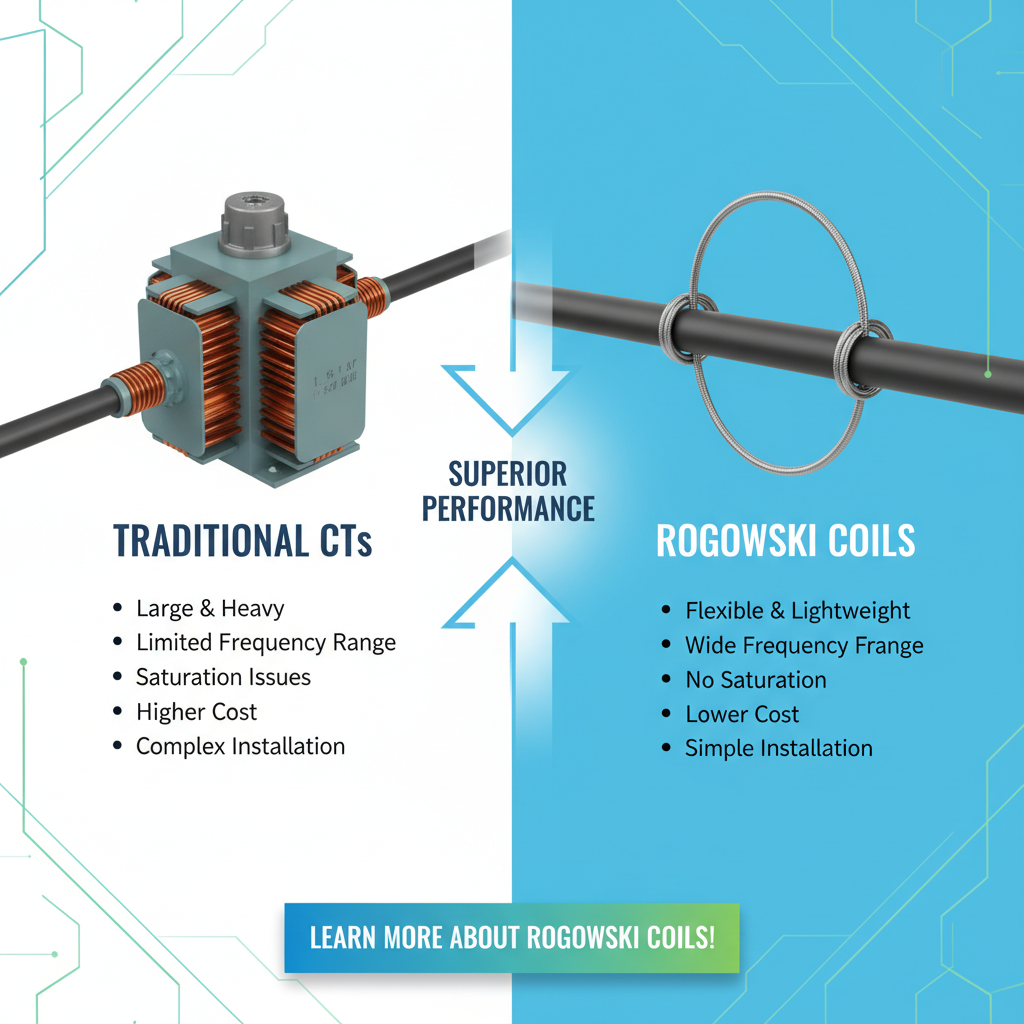
In the dynamic world of electrical engineering, precise and safe current measurement is paramount. While traditional current transformers (CTs) have long been the industry standard, a more flexible and often superior alternative has emerged: the Rogowski Coil. This innovative sensor technology offers significant advantages, especially for measuring high AC currents, making it indispensable in modern power systems and industrial applications.
Let’s delve into what makes the Rogowski Coil a game-changer for current sensing.
What is a Rogowski Coil?
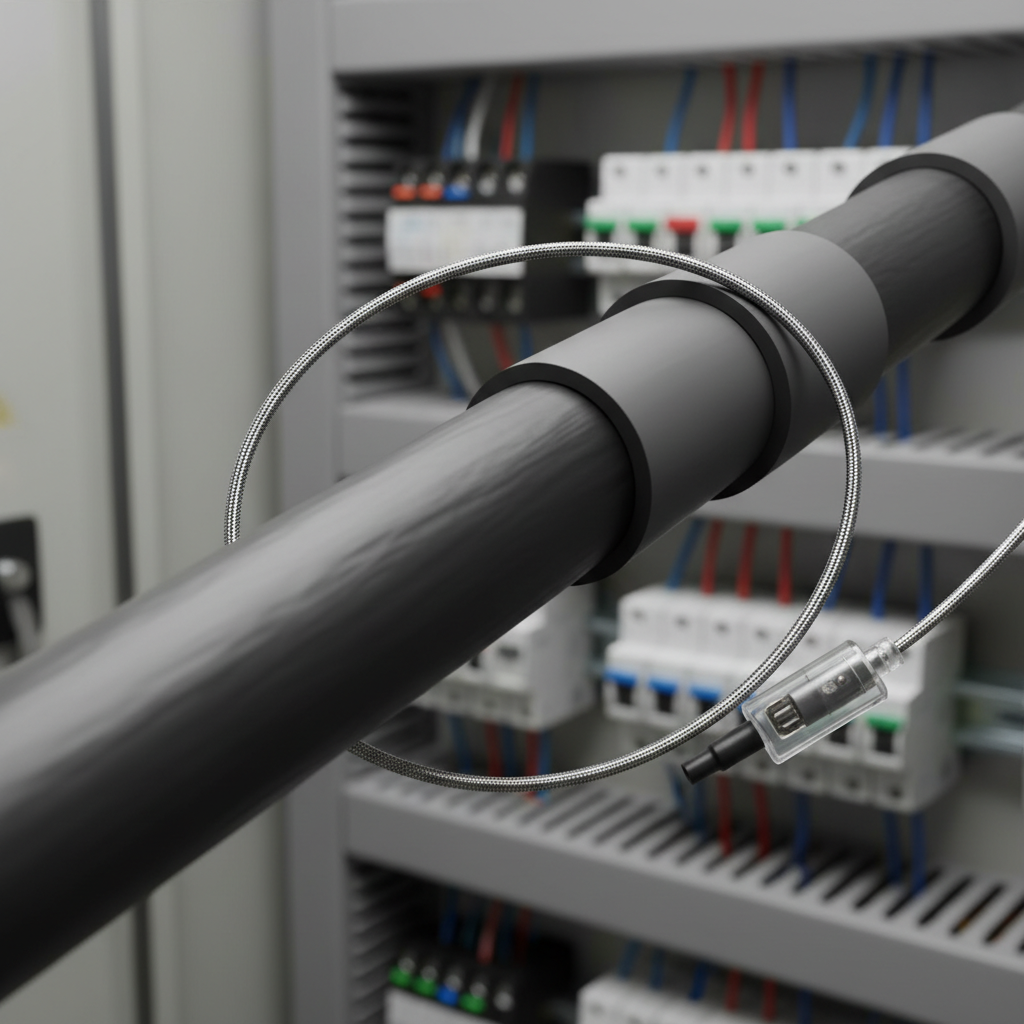
Named after the German physicist Walter Rogowski, the Rogowski Coil is an electrical device for measuring alternating current (AC) or high-speed current pulses. Unlike a conventional current transformer, which uses a ferromagnetic core, the Rogowski Coil is an air-cored toroid winding.
It is typically wound uniformly on a non-magnetic core (or often without one, making it flexible) and brought back through the center of the toroid to form a closed loop. When placed around a conductor carrying AC current, it measures the rate of change of current (di/dt) rather than the current itself. This distinction is crucial to its operation and benefits.
How Does a Rogowski Coil Work?
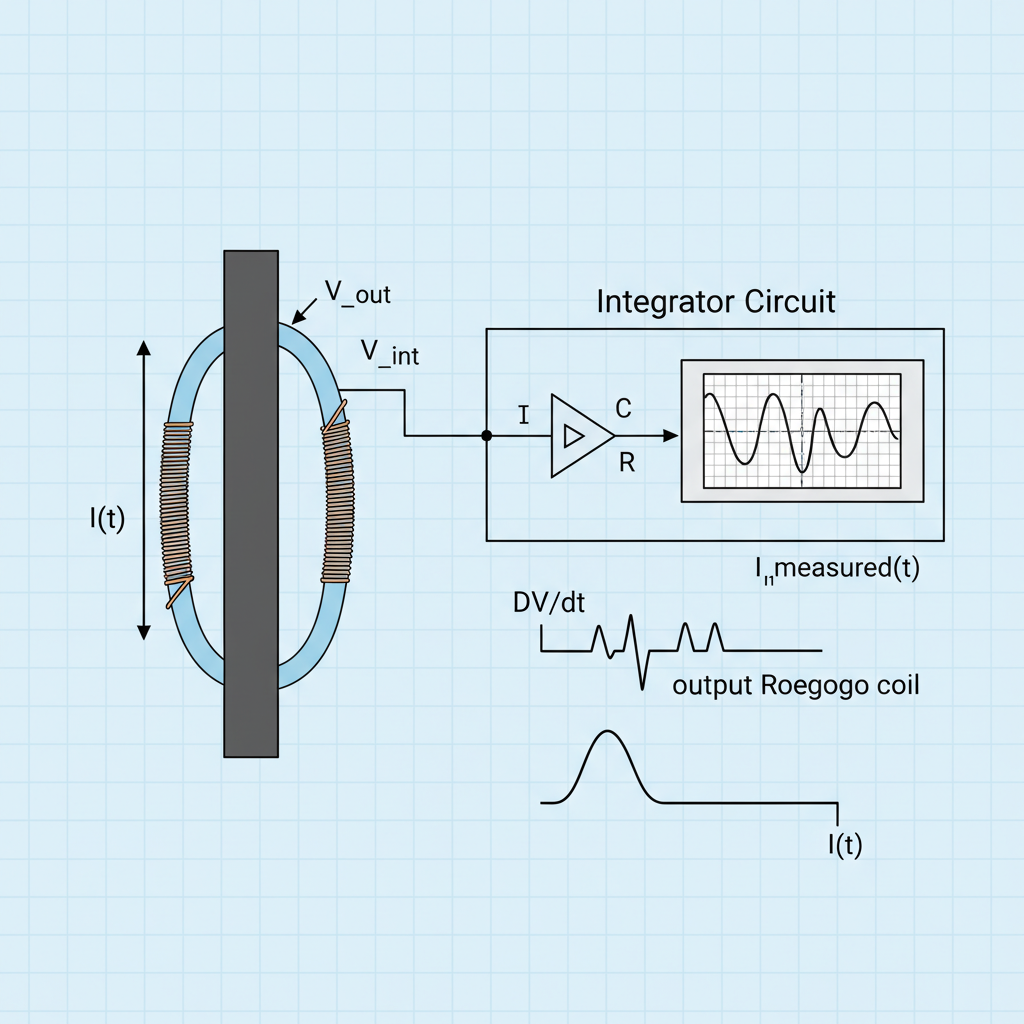
The principle behind a Rogowski Coil is based on Faraday’s Law of Induction. When an AC current flows through a conductor, it generates a time-varying magnetic field around it. The Rogowski Coil, being a closed loop, encloses this magnetic field. According to Faraday’s Law, a voltage is induced in the coil that is proportional to the rate of change of magnetic flux, and thus proportional to the rate of change of the current:
Vout ∝ di/dt
To obtain a signal proportional to the actual current (i), the output voltage from the coil must be integrated. This is typically done by an external electronic circuit, known as an integrator. The integrator converts the di/dt signal back into a waveform that accurately represents the primary current.
Key Advantages Over Traditional CTs
- No Saturation: Because Rogowski Coils lack a ferromagnetic core, they do not suffer from saturation effects. This means they maintain excellent linearity even with very high currents or transients, providing accurate measurements across an exceptionally wide dynamic range.
- Wide Bandwidth: They can accurately measure currents over a broad frequency range, from a few Hz up to several MHz, making them ideal for applications involving harmonics, transients, and high-frequency power electronics.
- Electrical Isolation and Safety: The air-core design provides inherent electrical isolation between the primary conductor and the measurement circuit, enhancing safety for personnel and equipment.
- Flexible and Lightweight: Many Rogowski coils are flexible, allowing them to be easily installed around conductors in tight spaces or where traditional rigid CTs wouldn’t fit. Their lightweight nature also simplifies installation.
- Non-Intrusive: They do not draw power from the primary circuit, ensuring minimal disturbance to the system being measured.
- Cost-Effective for High Currents: For very high currents (thousands of amps), Rogowski coils can be significantly more cost-effective than CTs of comparable accuracy and rating, as they don’t require expensive core materials.
Key Applications
The versatility and performance of Rogowski Coils have led to their adoption in numerous critical applications:
- Power Quality Monitoring: Analyzing harmonics, sags, swells, and transient events in power grids and industrial facilities.
- Renewable Energy Systems: Monitoring current in solar inverters, wind turbine generators, and battery storage systems.
- Industrial Automation: Motor control, welding applications, and process monitoring where high currents or fast transients are common.
- Circuit Breaker Testing: Due to their ability to measure extremely high peak currents without saturation.
- Electric Vehicle (EV) Charging Infrastructure: Accurate current measurement for billing and safety in EV charging stations.
- Research and Development: Ideal for high-current pulse measurements in laboratories.
Choosing the Right Rogowski Coil
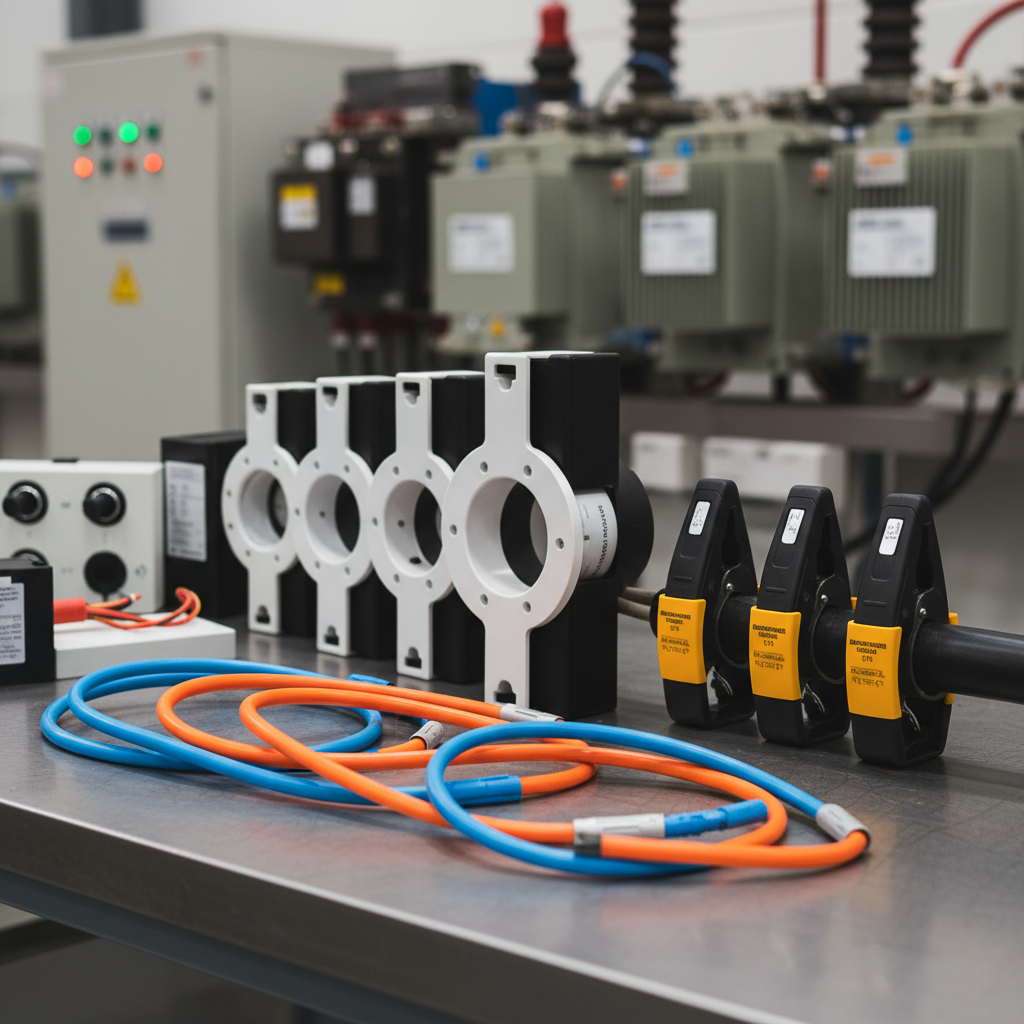
When selecting a Rogowski Coil, consider the following:
- Current Range: While non-saturating, the integrator circuitry will have limits.
- Frequency Response/Bandwidth: Ensure it meets your application’s requirements, especially for high-frequency measurements.
- Coil Length/Diameter: To fit around your target conductor(s).
- Output Type: Raw di/dt output or integrated voltage/current output (often through a signal conditioner).
- Accuracy Class: For specific metering or protective relaying applications.
The Future of Current Sensing
The Rogowski Coil represents a significant leap forward in AC current measurement technology. Its inherent advantages in linearity, bandwidth, safety, and flexibility make it a superior choice for a vast array of modern electrical applications, particularly where high currents, complex waveforms, and non-intrusive measurements are critical.
Are you looking to upgrade your current measurement capabilities? Explore how Rogowski Coils can enhance the safety, accuracy, and efficiency of your electrical systems.